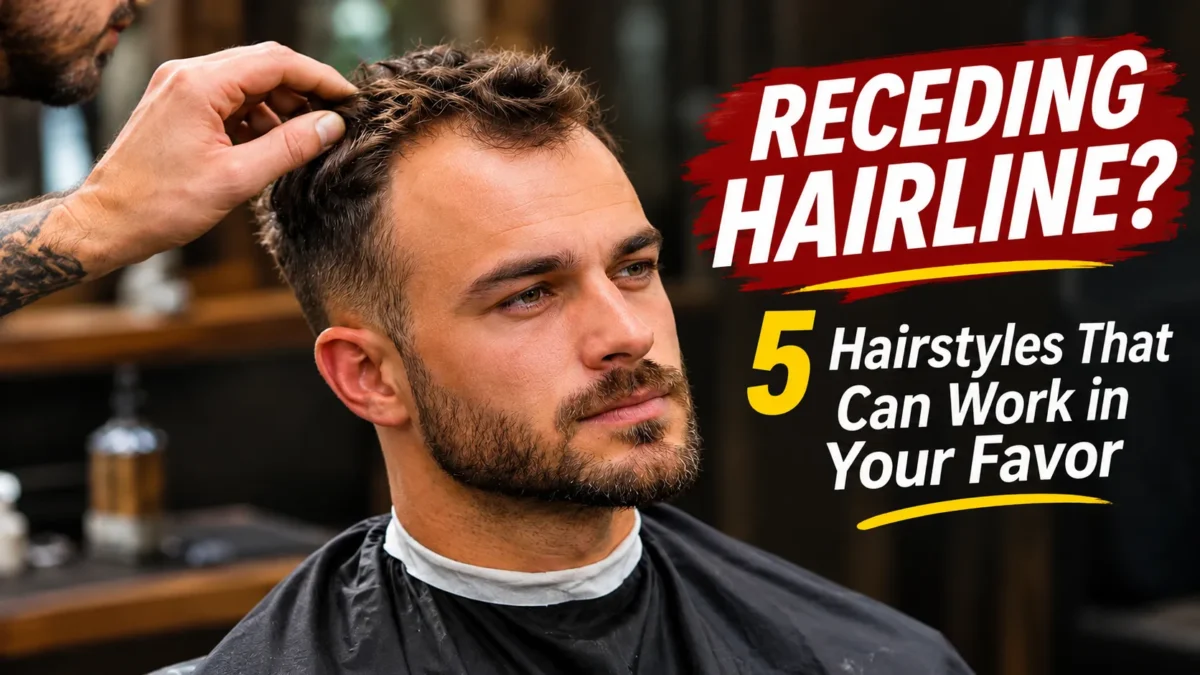
Receding Hairline? 5 Hairstyles That Can Work in Your Favor
Noticing your hairline moving back can change the way you feel about your appearance. Maybe your temples look a little more exposed than they used to, or your forehead seems more noticeable in photos. Whatever the reason, choosing a haircut can suddenly feel more complicated.
The good news? You don’t need a perfect, straight hairline to have a great hairstyle.
The right haircut can work with your natural hairline, make your hair easier to manage, and give your overall look a more balanced appearance. In many cases, shorter and more textured styles are easier to wear than trying to cover thinning areas with longer hair.
If you’re dealing with a receding hairline, here are five hairstyles worth considering, along with practical styling advice to help you find the right one.
Best Haircuts for Men With a Receding Hairline
1. What Is a Receding Hairline?
2. 5 Hairstyles That Work With a Receding Hairline
3. Which Haircut Should You Choose?
4. Styling Tips for a Receding Hairline
5. What to Tell Your Barber
6. Common Haircut Mistakes to Avoid
7. Frequently Asked Questions
8. Final Thoughts
What Is a Receding Hairline?
A receding hairline happens when the hair along the front of the scalp gradually moves backward, often starting around the temples. This can create an M-shaped appearance, although the pattern varies from person to person.
For many men, a changing hairline is associated with male pattern hair loss. Genetics and age can play a role, but not every changing hairline follows the same pattern.
Some men notice gradual temple recession while keeping plenty of hair on top. Others experience thinning across the crown as well.
Understanding where your hair is thinning can help you choose a haircut that works with what you have rather than fighting against it.
5 Hairstyles That Can Work in Your Favor
1. Buzz Cut: Keep It Simple and Clean
If you’re tired of trying to style your hair around a receding hairline, a buzz cut is worth considering.
This haircut keeps the hair short and relatively even across the head. Because there is less length to work with, the contrast between the hairline and the rest of your hair can become less noticeable.
A buzz cut also removes the need for complicated styling routines. You can usually get ready with little more than a quick wash and a towel dry.
Why it works:
- Keeps the overall haircut simple and consistent.
- Avoids drawing attention to longer, thinner sections.
- Requires very little daily styling.
- Works well for men who prefer a clean, low-maintenance appearance.
Styling tip: Ask your barber about a guard length that suits your head shape and hair density. A slightly longer buzz cut can be a good starting point if you’re not ready for an extremely short look.
2. Crew Cut: A Classic That Still Works
The crew cut is a practical choice if you want short hair without going as close as a buzz cut.
It usually features shorter sides and a slightly longer top. That extra length gives you some flexibility while keeping the haircut neat and easy to manage.
For men with a receding hairline, a crew cut can look especially good when the top is kept relatively short instead of being combed forward in an attempt to hide the temples.
Why it works:
- Creates a clean shape without needing much length.
- Keeps the sides tidy.
- Offers a little more styling flexibility than a buzz cut.
- Fits both casual and professional settings.
Styling tip: Use a small amount of matte styling paste if you want a natural finish. Avoid using too much product, as heavy styling products can make hair look clumped together.
3. Textured Crop: Add Movement Without Extra Length
Want something modern without committing to an extremely short haircut? Consider a textured crop.
This style keeps the sides relatively short while adding choppy, uneven texture to the top. A short fringe may fall naturally toward the forehead, depending on your hairline and how much coverage you prefer.
The key is texture, not simply adding more hair in front. A well-cut textured crop can give the top a fuller-looking finish without requiring long strands to cover the temples.
Why it works:
- Adds visual movement to the top.
- Works with many straight and wavy hair types.
- Can be adapted to different levels of temple recession.
- Doesn’t require a perfectly straight front hairline.
Styling tip: Apply a small amount of matte clay to your hair. Use your fingers to create a natural, slightly messy texture. Avoid forcing the front hair into a perfectly straight fringe.
4. Short Quiff: Keep Some Height on Top
If you enjoy a little volume, a short quiff may be worth trying.
A quiff involves styling the front section of the hair slightly upward and backward. For a receding hairline, keeping the quiff short and controlled is usually easier than creating a tall, dramatic shape.
The goal is to give the top some natural movement without making the temples stand out more than you want.
Why it works:
- Adds shape and dimension to the hairstyle.
- Gives you more styling options than a very short cut.
- Can work particularly well when the top still has reasonable density.
- Looks polished without being overly formal.
Styling tip: Apply a small amount of lightweight mousse to damp hair. Use a blow dryer on low or medium heat while lifting the front with your fingers. Finish with a little matte paste if needed.
If the hair around your temples is noticeably thin, ask your barber to keep the front length and volume balanced.
5. Side-Swept Hairstyle: A Softer, Natural Finish
Not every man with a receding hairline wants a short haircut. If you prefer keeping some length, a side-swept style can be a good alternative.
This hairstyle directs the hair gently to one side instead of pulling it straight back. It can create a relaxed shape and make styling feel less restrictive.
The important part is choosing a direction and length that suit your natural growth pattern. A heavy comb-over is different from a natural side-swept hairstyle. You want the hair to move comfortably, not look like it’s being forced into place.
Why it works:
- Keeps some length for a more traditional appearance.
- Creates a natural direction for the hair.
- Can suit straight and slightly wavy hair.
- Offers a neat look for both casual and professional outfits.
Styling tip: Use a lightweight styling cream and comb the hair gently to one side. Avoid slicking it tightly against the scalp, especially if your hair is fine.

Which Haircut Should You Choose?
The best haircut depends on more than how far your hairline has moved. Your hair density, hair texture, head shape, and personal style all matter.
Here’s a simple comparison to help narrow down your options.
| Hairstyle | Best suited for | Styling effort |
|---|---|---|
| Buzz Cut | Men who prefer very short hair | Very low |
| Crew Cut | Men who want a classic, neat look | Low |
| Textured Crop | Men who like a modern, relaxed style | Low to moderate |
| Short Quiff | Men who still have good density on top | Moderate |
| Side-Swept | Men who prefer keeping some length | Moderate |
Think about your daily routine, too. If you rarely spend time styling your hair, a buzz cut or crew cut may be more practical. If you enjoy using a blow dryer and styling products, a textured crop or short quiff could give you more flexibility.
Styling Tips for Men With a Receding Hairline
A good haircut is only part of the picture. How you style your hair each morning can also change its overall appearance.
Here are a few simple habits worth trying.
Choose lightweight products. Heavy waxes and oily products can weigh fine hair down. Lightweight mousse, matte paste, or texturizing products may provide a more natural finish.
Avoid forcing a comb-over. Pulling long strands across thinning temples can make the difference in hair density more obvious. Work with your natural growth pattern instead.
Be careful with excessive heat. A blow dryer can help create volume, but high heat used too often may damage hair. Use a moderate setting and avoid holding the dryer too close.
Keep the sides maintained. Regular trims help preserve the shape of shorter hairstyles. Ask your barber how often you should return based on your preferred cut.
Don’t chase someone else’s hairstyle. A haircut that looks great on a celebrity or model may not work the same way with your hair texture or hair density. Use reference photos for inspiration, not as an exact requirement.
What Should You Tell Your Barber?
Walking into a barbershop and simply saying “I have a receding hairline” doesn’t always explain the look you’re after.
It’s more helpful to describe the style and the areas you want your barber to consider.
You could say:
“I’ve noticed some recession around my temples. I’d like a haircut that works with my natural hairline, keeps the top balanced, and doesn’t rely on a heavy comb-over.”
You can also ask your barber to:
- Recommend a top length that suits your current hair density.
- Keep the sides neat without making the top look disproportionately thin.
- Add natural texture if your hair type allows it.
- Show you how the haircut looks from the front and sides.
- Suggest a simple styling routine you can manage at home.
Bring two or three reference photos if possible. Pictures make it easier to explain the length, shape, and finish you have in mind.
Common Haircut Mistakes to Avoid
A receding hairline doesn’t mean you have to avoid certain hairstyles forever. Still, a few styling choices can make thinning areas more noticeable.
Growing the front too long: Extra length doesn’t always create better coverage. Long, thin strands can separate and expose more of the scalp.
Using too much styling product: Heavy gels and waxes may cause strands to stick together, making the hair look less full.
Choosing an extreme contrast without considering density: Very short sides with a long, thin top can sometimes make differences in density more obvious. Ask your barber to balance the proportions.
Ignoring the crown: Hairline recession and crown thinning can happen together. Make sure your haircut works from every angle, not just the front.
Frequently Asked Questions
Q1: Can a haircut hide a receding hairline?
A haircut cannot reverse a receding hairline, but the right shape and length can make it less noticeable. Shorter cuts and textured styles are popular options because they work with natural hair density.
Q2: Is a buzz cut good for a receding hairline?
Yes, a buzz cut can be a practical option for many men. Its short, even length creates a simple appearance and avoids the need to cover thinning areas with longer hair.
Q3: Should I grow my hair longer to cover a receding hairline?
Not necessarily. Longer hair can sometimes make thinning areas more obvious, especially when the strands separate. The best length depends on your hair density, texture, and preferred style.
Q4: What is the easiest haircut to maintain?
A buzz cut is generally one of the easiest styles to maintain. A crew cut is another good option if you want a little more length on top.
Q5: Can styling products make thinning hair look fuller?
Some lightweight products can add texture and create the appearance of more volume. They won’t increase the number of hair follicles or reverse hair loss, but they can help your hairstyle look more balanced.
Q6: When should I see a dermatologist about a receding hairline?
If your hairline is changing quickly, you notice sudden shedding, patchy hair loss, scalp irritation, or other unusual symptoms, consider speaking with a dermatologist. They can help identify the cause and discuss appropriate options.
Final Thoughts
A receding hairline doesn’t have to dictate your entire hairstyle. The right cut can help you feel more comfortable with your appearance while making your daily grooming routine easier.
Start by considering your natural hair density, the amount of length you want to keep, and how much time you’re willing to spend styling your hair. A buzz cut or crew cut offers simplicity, while a textured crop, short quiff, or side-swept style gives you more room to experiment.
Most importantly, choose a haircut that feels like you. You don’t need to hide your hairline to look well-groomed and confident.

Vijay Anand is a men’s style and grooming writer at Nexoye, specializing in face shape-based styling, beard design, and modern grooming trends. His content is designed to help men improve their look with simple, practical, and effective guidance.
GADGETS
Body Mass Index Calculator
Ideal Body Weight Calculator
Body Fat Percentage Calculator