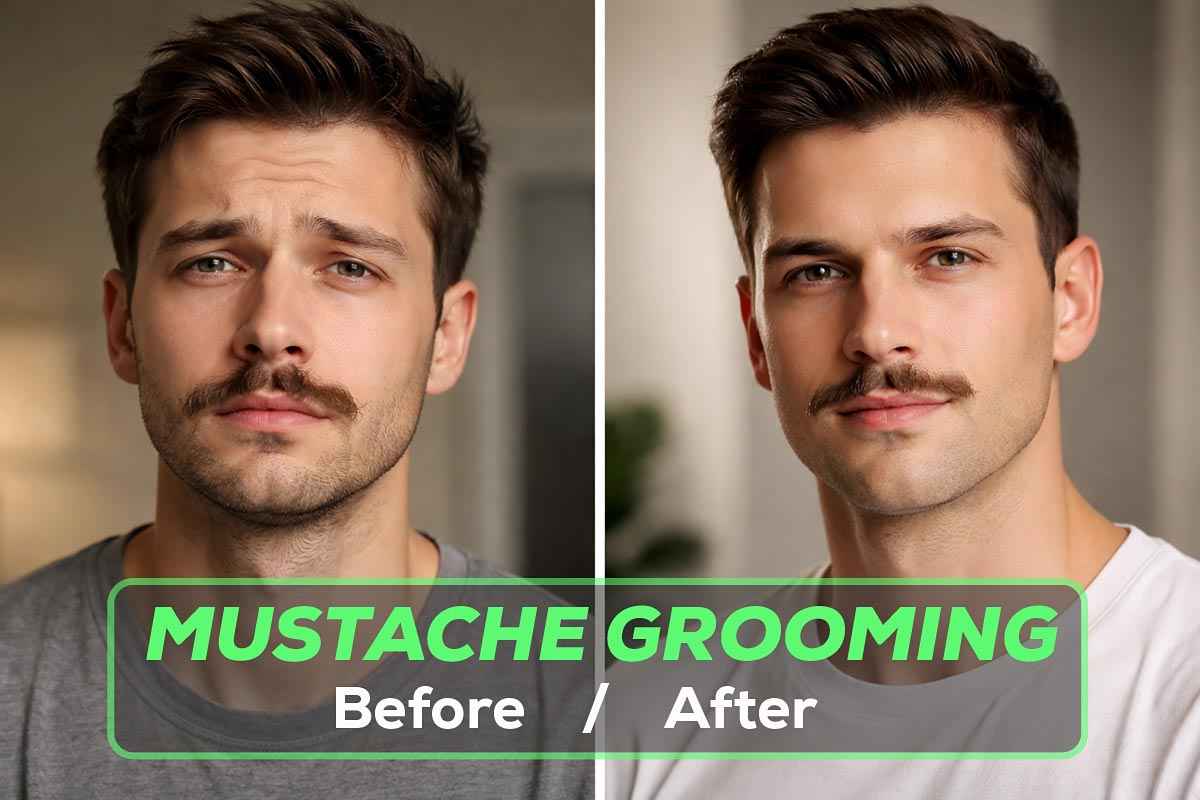
Split image showing a man with an ungroomed messy mustache on the left and a clean well-groomed mustache on the right with a confident look
Before and after mustache grooming comparison showing how a clean, well-groomed mustache improves overall appearance and confidence.

First-Time Mustache Grooming Guide (2026)

A simple, practical guide to help you groom your mustache the right way from day one.

Growing your first mustache is exciting… until it starts looking uneven, messy, or just off. That’s where most beginners lose confidence.

Here’s the truth: It’s not your growth that makes you look good, it’s your grooming.

In this guide, you’ll learn exactly how to groom your mustache step by step, using simple tools and real-world techniques that actually work.

Why Grooming Matters More Than Growth?

A thick mustache doesn’t automatically look good. A thin one isn’t weak either. What matters is how clean and intentional it looks.

Let’s understand it this way.

  • Clean edges = sharper appearance
  • Balanced shape = better facial structure
  • Regular care = healthier hair and skin

From experience, most beginners think growth is the goal. It’s not.

Control is the goal.

When Should You Start Grooming Your Mustache?

One of the most common mistakes beginners make is trimming too early.

Wait at least 2–3 weeks before your first trim. This allows enough growth to shape properly.

Signs you’re ready:

  • Hair starts touching your upper lip
  • Growth looks uneven
  • You feel the need to “fix” it

If you trim too early,  you reduce density and often have to start over.

Basic Tools You Need (Beginner-Friendly)
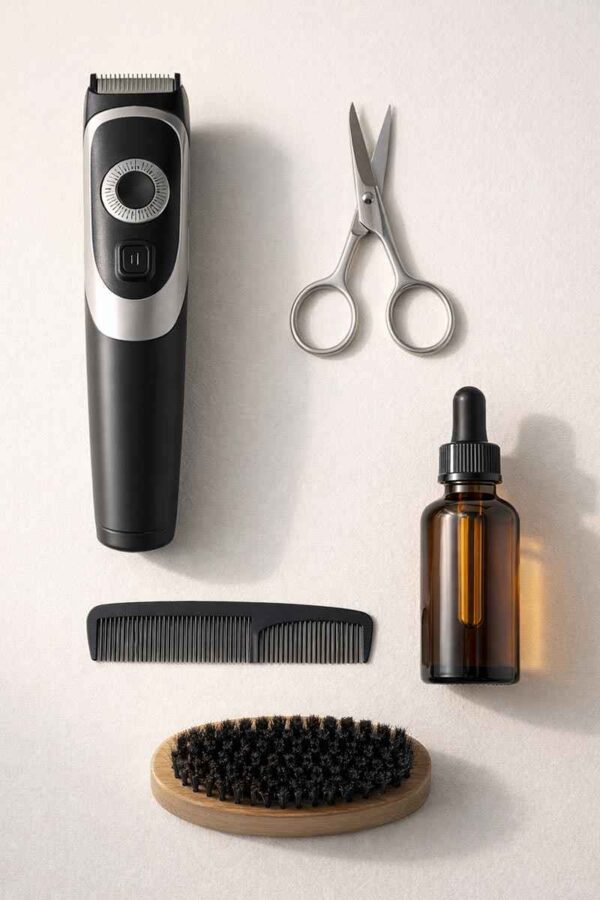
Flat lay of mustache grooming tools including trimmer, scissors, comb, beard oil, and brush arranged on a clean background
Essential mustache grooming tools every beginner needs for clean trimming, shaping, and daily care.

You don’t need a complicated setup. Start with:

  • Precision trimmer: For shaping and clean edges
  • Small scissors: For detailed trimming
  • Mustache comb: Aligns hair before cutting
  • Light oil or balm: Softens and controls hair

Pro tip: Always comb your mustache before trimming. It prevents uneven cuts.

Step-by-Step: How to Groom Your Mustache (First Time)
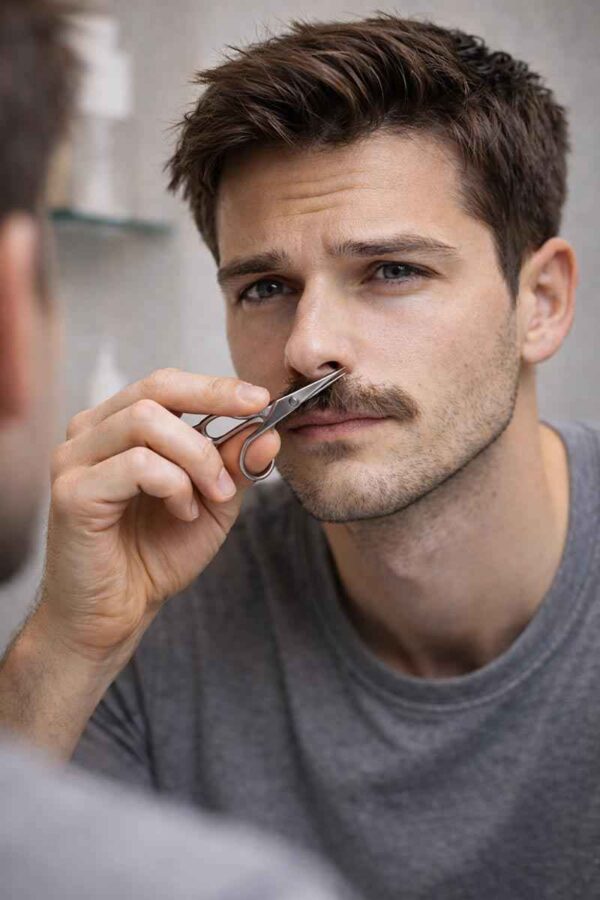
Close-up of a man trimming his mustache with small scissors held correctly between thumb and fingers in front of a mirror
Trimming your mustache with scissors using the correct finger and thumb grip for precise control and clean edges.

Follow these steps slowly. Don’t rush, this is where most mistakes happen.

Step 1: Clean Your Mustache

Wash it with a gentle cleanser or beard shampoo.
Pat dry, don’t rub.

Clean hair is easier to trim evenly.

Step 2: Comb It Properly

Brush your mustache downward and outward.

This reveals the true length and helps you spot uneven areas.

Step 3: Trim the Edges

Focus on the area just above your upper lip.

  • Remove hairs covering your lip
  • Keep a natural line
  • Trim less than you think

Most beginners over-trim here. Go slow.

Step 4: Shape the Mustache

Close-up of a man shaping his mustache with a precision trimmer, creating clean edges with a sharp jawline
Using a precision trimmer to shape your mustache helps create clean edges and a sharp, well-defined look.

Use a trimmer or scissors to define the shape.

  • Follow your natural growth
  • Keep both sides even
  • Avoid sharp, artificial lines

From experience, this is where people mess up by trying advanced styles too early.
Keep it simple. Clean beats complex.

Step 5: Final Touch (Oil or Balm)

Apply a small amount.

  • Softens hair
  • Adds a natural shine
  • Keeps it in place

This step can noticeably improve your overall look.

Thin vs Thick Grooming (Quick Insight)

Your grooming approach depends on your style:

Thin Mustache

  • Focus on precision
  • Maintain clean edges
  • Works best for a sharp, professional look

Thick Mustache

  • Focus on control
  • Use comb + light styling
  • Avoid covering your lip

Simple rule: Thin = precision | Thick = control

Common Beginner Mistakes (Avoid These)

These mistakes are more common than you think:

1. Over-Trimming

You cut too much and lose shape.
Fix: Trim slowly and check often

2. Uneven Sides

One side looks heavier.
Fix: Compare both sides in the mirror

3. Ignoring the Lip Line

Hair over the lip looks messy.
Fix: Keep a clean, natural edge

4. No Routine

You groom once and forget it.
Fix: Build a simple weekly habit

Daily vs Weekly Routine

Consistency matters more than perfection.

Daily (1–2 minutes)

  • Rinse or clean
  • Comb into place
  • Apply a little oil

Weekly (5–10 minutes)

  • Trim edges
  • Shape your mustache
  • Check balance

Best Mustache Styles for Beginners

Start simple. These styles are easy to manage:

1. Natural Mustache

Light trimming, follows your growth

2. Thin Mustache

Clean, sharp, and beginner-friendly

3. Light Beard + Mustache

Balances your face and hides patchiness

Avoid complex styles in the beginning.

How Long Does It Take to Get a Good Mustache?

2–3 weeks — basic shape
4–6 weeks — fuller look
6–8 weeks — thicker styles

Growth takes time. Grooming makes it look good during that time.

Practical Tips That Make a Real Difference

  • Trim on dry hair for accuracy
  • Use natural lighting
  • Keep tools clean
  • Match your mustache to your face shape

Honestly, small habits like these make a bigger difference than most people expect.

FAQs

Q1. How often should I groom my mustache?
Light grooming daily, trimming once a week is enough.

Q2. Can I groom without a trimmer?
Yes, scissors work—but a trimmer gives better control.

Q3. What style is best for beginners?
Natural or thin mustache is easiest to manage.

Q4. Why does my mustache look uneven?
Uneven growth is normal early on. Regular grooming fixes it.

Q5. Should I use oil daily?
Yes, a small amount keeps hair soft and manageable.

GADGETS

Body Mass Index Calculator

Ideal Body Weight Calculator

Body Fat Percentage  Calculator