





Winter Jackets for Men: A Clear, Practical Guide for Real Winter Use
Winter jackets for men are more than just cold-weather wear. They are the one piece you use every day during winter, whether you’re going to work, running errands, or traveling. A good winter jacket keeps you warm, feels comfortable, and fits your lifestyle. That’s why choosing the right one matters when the temperature drops.
This guide focuses on facts, real-world applications, and proven clothing principles. It provides clear information to help you make smart decisions that suit your climate, lifestyle, and personal style.
In This Article:
1. Why Winter Jackets Matter More Than Any Other Layer?
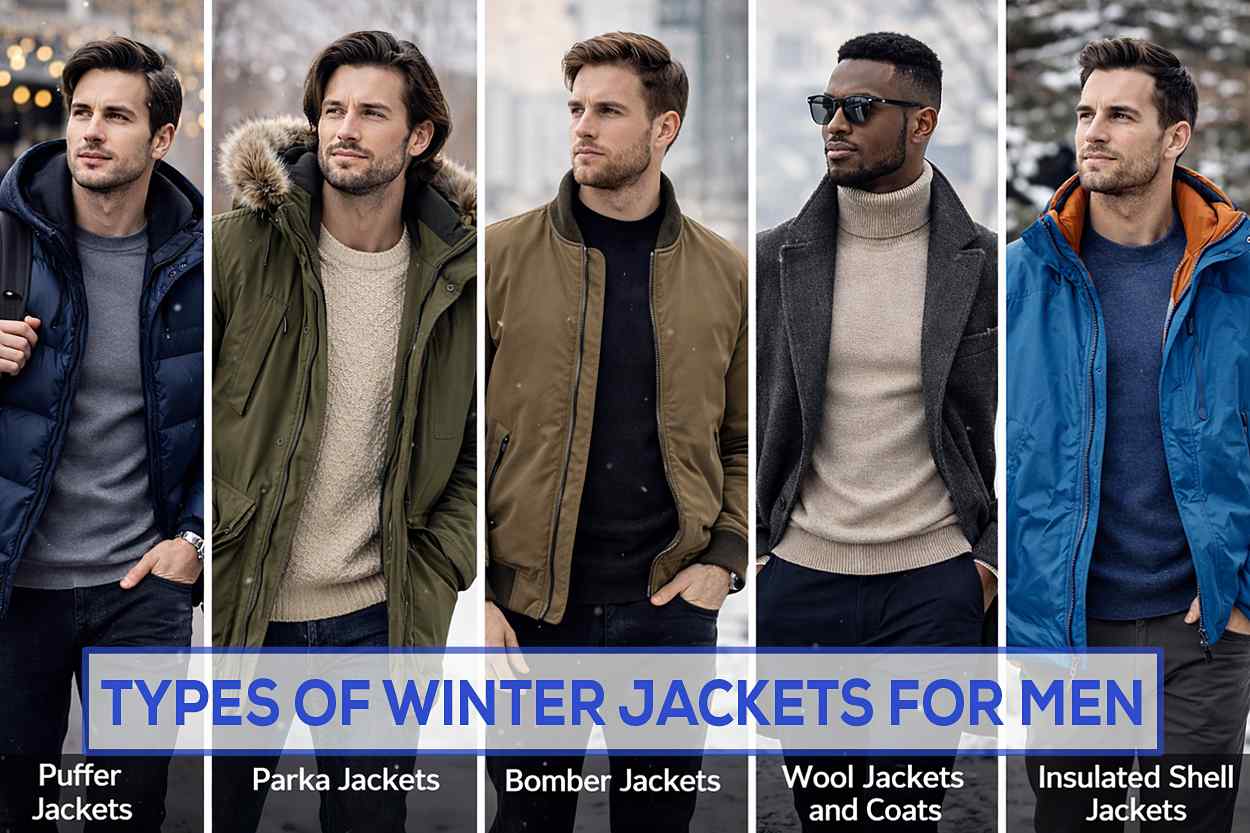
2. Types of Winter Jackets for Men
3. Puffer Jackets
4. Parka Jackets
5. Bomber Jackets
6. Wool Jackets and Coats
7. Insulated Shell Jackets
8. Choosing a Winter Jacket Based on Climate
9. Insulation and Fabric: What Actually Works
10. A Practical Guide to Styling and Choosing Winter Jackets for Men
11. Conclusion
12. FAQs
Why Winter Jackets Matter More Than Any Other Layer
In cold months, your jacket does most of the work. Shirts and sweaters help, but your jacket blocks wind, holds warmth, and protects you from moisture.
The U.S. National Weather Service explains that cold air and wind pull heat away from your body faster than cold alone. That’s why how a jacket is built, how it insulates, and how it fits matter far more than logos or fashion trends.
A good winter jacket should:
- Keep your body warm
- Block cold wind
- Protect you from light rain or snow
- Let you move comfortably
- Fit your daily routine, not just look good
Types of Winter Jackets for Men
Every winter jacket serves a different purpose. Knowing the differences helps you avoid buying the wrong one.
Checkout types of jacket:

Puffer Jackets
Puffer jackets use insulated padding to trap warm air. Many designs use down or synthetic fill. They trap heat inside quilted layers, so your body stays comfortable even on cold, windy days. You can wear them for daily travel, outdoor walks, or casual winter outings. Easy to style, easy to carry, and built for real cold, puffer jackets make winter dressing simple and practical.
Why they work
- Insulation traps body heat efficiently
- Lightweight for the warmth they provide
- Easy to layer over sweaters
Best for
- Cold, dry winter conditions
- Casual wear
- Outdoor walking and commuting
Modern puffers now come in slimmer cuts, which improves both comfort and appearance.
Parka Jackets
Parkas extend below the waist and often include a hood. Many designs focus on cold and wind protection.
Why they work
- Longer length reduces heat loss
- Hoods protect the neck and head
- Often include wind-resistant shells
Best for
- Snowy or windy regions
- Long outdoor exposure
- Daily winter travel
Men in colder U.S. states often rely on parkas as their main winter jacket.
Bomber Jackets
Bomber jackets provide moderate warmth with a shorter length. They feel light, fit well, and work for daily wear. You can dress them up or down, making them a smart choice for casual outings and cool weather days.
Why they work
- Comfortable and easy to move in
- Clean, casual appearance
- Easy to style with jeans or chinos
Best for
- Mild to moderate winters
- Urban and casual settings
- Men who prioritize style over extreme warmth
They do not replace heavy winter jackets in very cold climates.
Wool Jackets and Coats
Wool jackets rely on natural fiber insulation. They work best in dry, cold environments. it’s offer natural warmth without feeling heavy. Breathe well, and hold their shape over time. Easy to dress up or down, they fit daily wear, work settings, and winter evenings with ease.
Why they work
- Wool retains warmth naturally
- Structured look suits office wear
- Breathable compared to synthetics
Best for
- Professional settings
- Light winter conditions
- Layered outfits
The Woolmark Company confirms that wool fibers trap air efficiently, which helps regulate body temperature in cold weather.
Insulated Shell Jackets
These jackets combine an outer shell with built-in insulation. Insulated shell jackets block wind and rain while keeping body heat locked in. They feel light but work hard, making them a smart choice for cold, wet days when comfort and movement both matter most.
Why they work
- Handle mixed weather conditions
- Resist wind and light rain
- Adapt well to daily use
Best for
- Travel
- Variable winter climates
- Men who want versatility
Choosing a Winter Jacket Based on Climate
A winter jacket should match the climate you live in, not just the style you like. Cold, windy, or wet weather demands different insulation and fabric choices. When you choose wisely, your jacket keeps you warm, comfortable, and ready for daily life without feeling heavy or restrictive. For example, winter conditions vary widely across the United States. Climate should guide your decision more than fashion trends.
Cold and Snow-Heavy Regions
Men in colder states need:
- High insulation
- Wind-resistant materials
- Full coverage designs
Parkas and insulated puffers work best here.
Mild or Short Winters
In warmer regions:
- Heavy jackets feel uncomfortable
- Breathability matters more
- Layering becomes important
Bomber jackets and lighter insulated coats perform better.
Fit Is Not Optional, It Is Essential
Fit controls warmth, comfort, and how the jacket looks on your body. A good winter jacket leaves room for a sweater, sits naturally on the shoulders, and covers your torso fully. Always try jackets with winter layers, not just a T-shirt.
Insulation and Fabric: What Actually Works
Understanding materials helps you avoid misleading labels.
Down Insulation
Down comes from duck or goose feathers.
Facts
- Excellent warmth-to-weight ratio
- Compresses easily
- Performs best in dry conditions
Limitations
- Loses insulation when wet
- Requires careful maintenance
Synthetic Insulation
Synthetic fill uses polyester fibers.
Facts
- Retains warmth when damp
- Easier to wash and care for
- More affordable for daily wear
Limitations
- Slightly heavier than down
The Outdoor Industry Association confirms that modern synthetic insulation offers reliable warmth for everyday winter use.
Insulation and Fabric: What Actually Works
Understanding materials helps you avoid misleading labels.
Down Insulation
Down comes from duck or goose feathers.
Facts
- Excellent warmth-to-weight ratio
- Compresses easily
- Performs best in dry conditions
Limitations
- Loses insulation when wet
- Requires careful maintenance
Synthetic Insulation
Synthetic fill uses polyester fibers.
Facts
- Retains warmth when damp
- Easier to wash and care for
- More affordable for daily wear
Limitations
- Slightly heavier than down
The Outdoor Industry Association confirms that modern synthetic insulation offers reliable warmth for everyday winter use.
A Practical Guide to Styling and Choosing Winter Jackets for Men
Styling a winter jacket does not need to be complicated. Function should always come first, with style supporting it.
Simple style rules that work:
- Pair bulky jackets with slim or straight-fit pants
- Stick to neutral colors like black, navy, gray, and olive
- Avoid heavy layering that limits movement
Practical features that matter:
- Adjustable cuffs to keep cold air out
- Strong, high-quality zippers
- Secure inner pockets for daily essentials
- Water-resistant outer fabric for snow and light rain
How many winter jackets does a man need?
Most men only need two:
- One heavy jacket for the coldest days
- One lighter jacket for everyday winter wear
Care and longevity:
- Follow the manufacturer’s washing instructions
- Avoid washing too often
- Store jackets clean and dry after winter
Conclusion: Choose Based on Use, Not Trends
Fashion trends change every year. Winter temperatures do not.
The best winter jackets for men match climate, fit correctly, and support daily routines. When function leads the decision, style naturally follows.
If you want your winter jacket to work every morning, focus on insulation, fit, and fabric first. The right choice will serve you for years, not just one season.
FAQs
Q1: What type of winter jacket is best for very cold weather?
Parka jackets and insulated puffer jackets provide the best protection in extreme cold.
Q2: Are bomber jackets suitable for winter?
Bomber jackets work well in mild winter conditions but do not provide enough insulation for freezing temperatures.
Q3: How should a winter jacket fit?
A winter jacket should allow layering without feeling tight and should cover the torso properly to retain heat.
GADGETS
Body Mass Index Calculator
Ideal Body Weight Calculator
Body Fat Percentage Calculator