
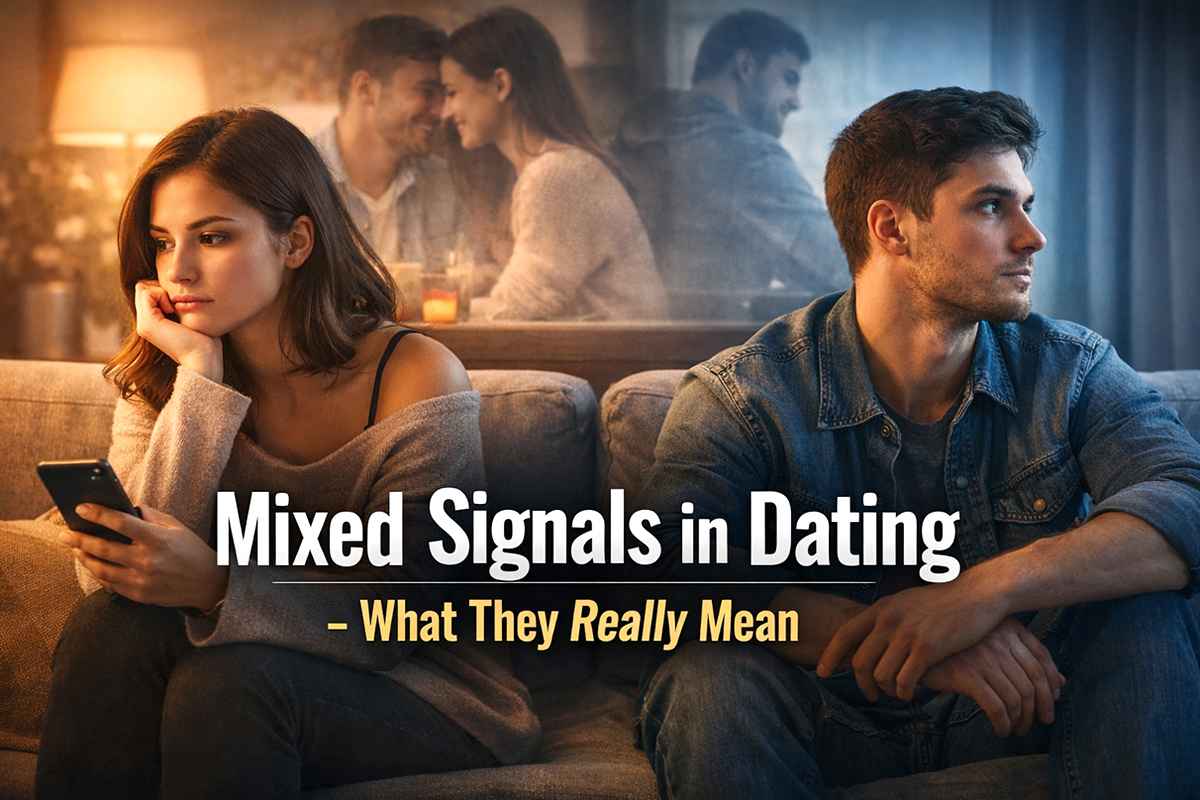
Couple sitting apart on a couch looking emotionally distant, representing confusion and mixed signals in modern dating relationships
A couple sitting emotionally distant on a couch, symbolizing confusion, inconsistency, and mixed signals in modern dating.

Mixed Signals in Dating – What They Really Mean

One day you walk away from your phone feeling excited, and the next day you feel completely confused. They flirt with you, open up, and make you feel noticed. Then suddenly they become quiet, distant, and almost cold. There was no fight and no clear reason for the change, just an emotional swing that leaves you unsettled.

If you have ever caught yourself wondering whether they like you or not, you have already experienced mixed signals. Modern dating has made this pattern very common. But behind the confusion, there are real psychological reasons. When you start to understand them, the situation feels less mysterious and much easier to read.

Let’s break it down in a grounded, honest way.

Here’s what this article explores:

1. What Are Mixed Signals in Dating?
2. Common Examples of Mixed Signals
3. Why People Send Mixed Signals
4. How to Read Mixed Signals Accurately
5. When Mixed Signals Are Temporary
6. When Mixed Signals Become a Red Flag
7. The Emotional Impact of Mixed Signals
8. What You Should Do If You’re Receiving Mixed Signals
9. Why Consistency Is More Attractive Than Chemistry
10. The Deeper Truth About Mixed Signals
11. FAQs


What Are Mixed Signals in Dating?

Mixed signals happen when a person’s words, actions, and emotional availability do not match.

They may say they miss you but take days to reply. They plan dates and then cancel at the last minute. They act caring and protective but avoid defining the relationship. You are not imagining the inconsistency.

It is real, and it creates emotional uncertainty because your mind cannot find a stable pattern. In simple terms, mixed signals mean someone shows interest without consistency.

Common Examples of Mixed Signals

Recognizing the behaviors is the first step to understanding what’s really happening.

1. Hot and Cold Communication

One week you talk nonstop with late night calls, inside jokes, and deep conversations. The next week the energy changes. Replies become short, responses get delayed, and emotional distance starts to show.

This push and pull pattern usually reflects inner confusion or emotional conflict, not just a busy schedule.

2. Flirting Without Clarity

They compliment you, tease you, and maintain strong eye contact. Sometimes they even hint at romantic interest. But when the conversation shifts toward labels or exclusivity, they avoid it or turn it into a joke.

The attraction is clearly there, but the commitment is not.

3. Future Talk Without Follow-Through

They talk about trips, events, or long term plans.

They say things like,

  • We should go there together
  • You’d love my friends
  • Next month we’ll plan something

But those plans never happen. This builds emotional closeness without real relationship commitment. People often call this future faking or breadcrumbing.

4. Jealousy Without Ownership

They react when you talk about dating other people. Their tone changes and they become protective. But they still avoid defining the relationship or saying what you both are.

This often shows emotional attachment, along with a fear of responsibility or commitment.

5. Deep Emotional Moments, Then Withdrawal

They share personal stories about their childhood, fears, and past heartbreak, which creates emotional closeness. Then suddenly, they pull away and become distant.

This pattern often connects to a fear of intimacy or an avoidant attachment style.

Why People Send Mixed Signals

Here’s where clarity replaces confusion. Mixed signals rarely happen randomly, they’re rooted in psychology.

1. They Like You, But Are not Sure Enough

Attraction exists. Chemistry is real. But something makes them hesitate:

  • Lifestyle differences
  • Timing issues
  • Emotional readiness
  • Long-term compatibility doubts

So they stay close emotionally while keeping relational distance.

2. Fear of Commitment

Past heartbreak, betrayal, or toxic relationships can wire someone to associate closeness with pain. They enjoy connection, until it starts feeling serious.

Then instinct tells them to step back to regain emotional control.

3. Keeping Options Open

Modern dating apps have made multi dating feel normal. Someone may genuinely like you while still talking to or meeting other people. It does not always mean you are rejected, but it also shows you are not their top priority.

This often leads to uneven effort and inconsistent emotional investment.

4. They Crave Attention, Not Partnership

Some people enjoy validation more than connection.

Flirting, texting, and emotional closeness boost their self-esteem, but they do not want the responsibility of a relationship.

You feel emotionally engaged. They feel socially entertained.

5. Emotional Unavailability

Modern dating apps have made multi dating feel normal. This goes beyond fear of commitment. People who are emotionally unavailable often struggle to express their feelings, feel overwhelmed when intimacy grows, prioritize independence too strongly, and shut down when conversations become emotionally deep.

They may genuinely care about you, but they often lack the emotional capacity to show up with consistency.

How to Read Mixed Signals Accurately

One of the biggest dating mistakes is overvaluing words and undervaluing patterns. Attraction lives in actions, not promises.

Here’s what to watch:

Consistency of Effort

Do they show up regularly, or only when convenient?

Initiative Balance

Is planning mutual, or one-sided?

Emotional Presence

Are conversations surface-level or progressively deeper?

Reliability

Do plans happen, or stay theoretical?

If effort feels unpredictable, the signal isn’t mixed. It’s inconsistent.

When Mixed Signals Are Temporary

Not all inconsistency signals disinterest.

Sometimes life circumstances create emotional fluctuation:

  • Work stress
  • Family crises
  • Mental health dips
  • Healing from past relationships

The key difference?

Interest remains visible even during distance. They communicate. They reassure. They return with intention. Temporary inconsistency still carries emotional accountability.

When Mixed Signals Become a Red Flag

There is a tipping point where confusion stops being situational and becomes behavioral.

Watch for these warning signs:

  • You feel anxious more than secure
  • Conversations lack clarity about the future
  • Emotional intimacy happens only on their terms
  • You’re always adjusting to their availability
  • They avoid defining the relationship long-term

Healthy attraction feels grounding. Chronic confusion feels draining.

The Emotional Impact of Mixed Signals

Mixed signals do not just create confusion, they can also create emotional addiction. The hot and cold behavior triggers dopamine spikes in the brain. Warm attention feels more rewarding because it is unpredictable, much like gambling. You may find yourself chasing emotional highs instead of looking at whether the connection feels stable and secure.

Over time, this pattern can damage self worth because you keep trying to earn consistency rather than receiving it naturally.

What You Should Do If You’re Receiving Mixed Signals

Clarity requires both observation and action.

1. Watch Patterns, Not Moments

Anyone can show interest occasionally. Consistency reveals intention.

2. Ask Direct Questions

Instead of guessing, create space for honesty:

  • What are you looking for right now?
  • How do you see this progressing?

Clarity saves emotional time.

3. Match Their Energy

If they’re inconsistent, don’t overcompensate.

Reciprocity protects emotional balance.

4. Slow Your Emotional Investment

Stay present, but don’t build future fantasies on unstable behavior.

Let actions earn deeper attachment.

5. Be Willing to Walk Away

The strongest boundary is emotional self-respect. If clarity never arrives, distance becomes your clarity.

Why Consistency Is More Attractive Than Chemistry

Chemistry feels exciting, but consistency builds emotional safety. Anyone can create sparks in the beginning, yet only a few people maintain emotional reliability over time. Long term attraction grows where communication stays steady, effort comes from both sides, and emotional presence feels calm and secure.

Confusion may feel passionate in the moment, but peace is what truly sustains a lasting connection.

The Deeper Truth About Mixed Signals

Here’s the insight most people realize too late:

When someone truly wants you in their life, their behavior simplifies, it does not complicate.

  • They make time.
  • They communicate openly.
  • They follow through.
  • They remove doubt instead of creating it.

Interest that matters feels clear, not cryptic.

A Final Thought, Mixed Signals in Dating Meaning

If you constantly find yourself trying to decode someone’s behavior, pause and ask yourself one simple question. Do I feel emotionally secure or emotionally unsure?

Mixed signals usually do not come from mystery. They come from hesitation, emotional unreadiness, or not making you a priority. In dating, clarity is not asking for too much. It is the basic foundation of something real.

The bottom line is this. Attraction may begin with excitement and sparks, but healthy relationships grow through consistency. If someone’s presence feels confusing instead of reassuring, it may be time to stop over analyzing their words and start paying attention to their patterns.

FAQs

Q1. What are mixed signals in dating?
Mixed signals occur when someone shows inconsistent interest through words, actions, or emotional behavior, creating confusion about their true intentions.

Q2. Why do people send mixed signals?
Common reasons include fear of commitment, emotional unavailability, keeping options open, or uncertainty about long-term compatibility.

Q3. Are mixed signals a red flag?
They can be. Occasional inconsistency is normal, but repeated hot-and-cold behavior often signals lack of clarity or emotional readiness.

Q4. How should you respond to mixed signals?
Observe patterns, communicate directly, avoid overinvesting emotionally, and prioritize consistency over chemistry.