Valentine’s Day Pressure: Why Love Feels Like a Performance Now
Valentine’s Day has a different energy — you notice it even before the evening begins.
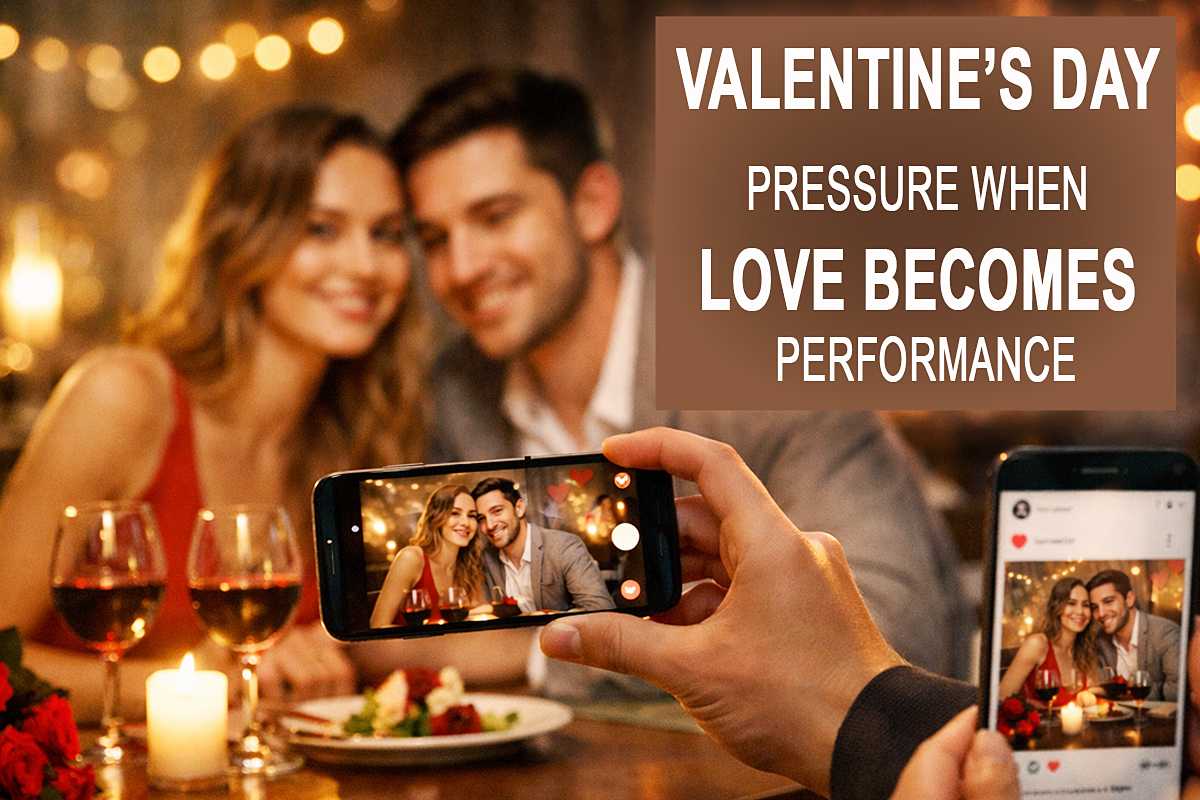
Restaurants fill with roses, candles, and dressed-up couples. Everything looks romantic at first glance. But if you watch closely, the moments feel slightly rehearsed. People pause before eating to take photos. Phones come out before hands reach across the table. Smiles get repeated until they look perfect on screen.
No one talks about it openly. Yet the atmosphere feels carefully arranged.
Love, on this day, sometimes feels less like something two people are simply living… and more like something being quietly presented to the world beyond their table.
When the Moment Stops Belonging to the Couple
There was a time when Valentine’s Day felt quieter and more personal.
A handwritten card hidden inside a book. A soft, slightly awkward dinner conversation. Nothing grand, but deeply sincere. The memory stayed between two people, untouched by outside eyes.
Now the instinct often works differently.
The moment happens… and almost immediately, it gets recorded.
Experiencing Love Through the Camera First
Before anyone smells the flowers, they take photos. Before emotions settle, someone records the reaction. Many couples end up watching their own celebration through a screen before they fully feel it.
This distance isn’t intentional. It’s simply become habit.
How Documentation Replaced Presence
Over time, documenting moments started sitting next to the experience itself. In some cases, it even moved ahead of it.
Instead of asking, Did this feel meaningful?
The quieter question became, Did this look meaningful?
The change feels small on the surface. But emotionally, it shifts everything.
The Rise of Valentine’s Day Pressure
Valentine’s Day pressure rarely begins inside the relationship. It builds externally, long before the date arrives.
Social Media Expectations vs Real Relationship Pace
Timelines fill up days in advance. Surprise vacations. Luxury gifts. Cinematic room decorations. Professionally edited reels.
None of it is inherently negative. But repeated exposure recalibrates what “normal” starts to look like.
How Comparison Quietly Reshapes Satisfaction
Psychologist Leon Festinger’s social comparison theory explains how people evaluate their lives against others’ visible experiences.
You scroll past ten elaborate celebrations… and suddenly your simple dinner feels insufficient, even if you were excited about it hours ago.
The relationship hasn’t changed. The comparison has.
When Love Starts Feeling Like a Performance
Performance doesn’t mean inauthentic. Often, it means pressured.
Planning Emotions Around Presentation
Couples start planning evenings around aesthetics as much as intimacy. Restaurants are chosen for ambiance photos. Surprises timed around lighting.
Care still exists. But intention begins splitting — between partner and presentation.
The Influence of Being Observed
Sociologist Erving Goffman once framed social life as stage performance, where people manage impressions based on audience awareness.
Valentine’s Day intensifies that awareness. Love isn’t just experienced. It’s displayed.
The Quiet Anxiety Behind “Perfect” Celebrations
Perfect celebrations often carry quiet anxiety. Some couples feel excited, but others feel drained by unspoken expectations. A silent checklist runs in the background,
Is this thoughtful enough?
Should we post it?
Does this look impressive?
These questions rarely get voiced, yet they shape behavior. Social approval also affects how partners judge the day. It doesn’t make love shallow, but it layers perception. Couples don’t just feel the relationship, they observe and evaluate it at the same time.
Social Media Display vs Emotional Reality
Here’s where things get nuanced. Visibility doesn’t always reflect emotional depth.
Some highly visible couples struggle privately, while deeply connected ones may rarely post at all. Display and intimacy don’t always move together.
Research in Personality and Social Psychology Bulletin suggests frequent relationship posting can link to validation-seeking behavior. Not in every case, but often enough to show a pattern.
Sometimes, visibility fills spaces where emotional certainty feels unclear.
When Posting Becomes Part of the Celebration
When posting becomes part of the celebration, many couples slip into it without thinking. The food arrives, conversation pauses, and someone says, “Wait, photo first.” It feels sweet and harmless, but it breaks the flow of the moment. Presence takes a back seat while the memory gets documented.
Psychologists call this self-presentation: shaping behavior when you feel watched. On Valentine’s Day, that feeling of being observed lingers, even when no one is truly paying attention.
The Effort Gap Becomes More Visible
This day magnifies effort differences too. Planning Imbalance on Valentine’s Day. If one partner plans everything and the other coasts, the imbalance feels louder than usual.
Because expectations are culturally heightened.
When Effort Feels Symbolic
Who booked dinner?
Who chose the gift?
Who remembered first?
The day becomes a visible scoreboard of care, sometimes unfairly.
Long-Term Couples Feel the Pressure Differently
Couples together for years experience the pressure more quietly.
Nostalgia vs Present-Day Reality
They remember early celebrations, the novelty, the nervous excitement — and compare it to present routine.
Routine, Romance, and Cultural Expectation
The question becomes: Should we do something big?
Not from desire. From obligation.
Why Performing Love Feels Emotionally Draining Over Time
As private moments increasingly move into public view, many couples feel a quiet pressure to present their love rather than simply live it.
Social media highlight reels and algorithm-driven visibility amplify comparison, making everyday relationships feel less “enough.” Over time, maintaining that visible perfection becomes emotionally tiring.
Love starts getting evaluated by how it looks instead of how it feels, creating subtle disconnect. Away from observation, though, genuine intimacy still looks simple, more conversation, less documentation, and moments fully lived rather than displayed.