






Compass Pose (Surya Yantrasana): A Complete Guide to Technique, Benefits, and Safety
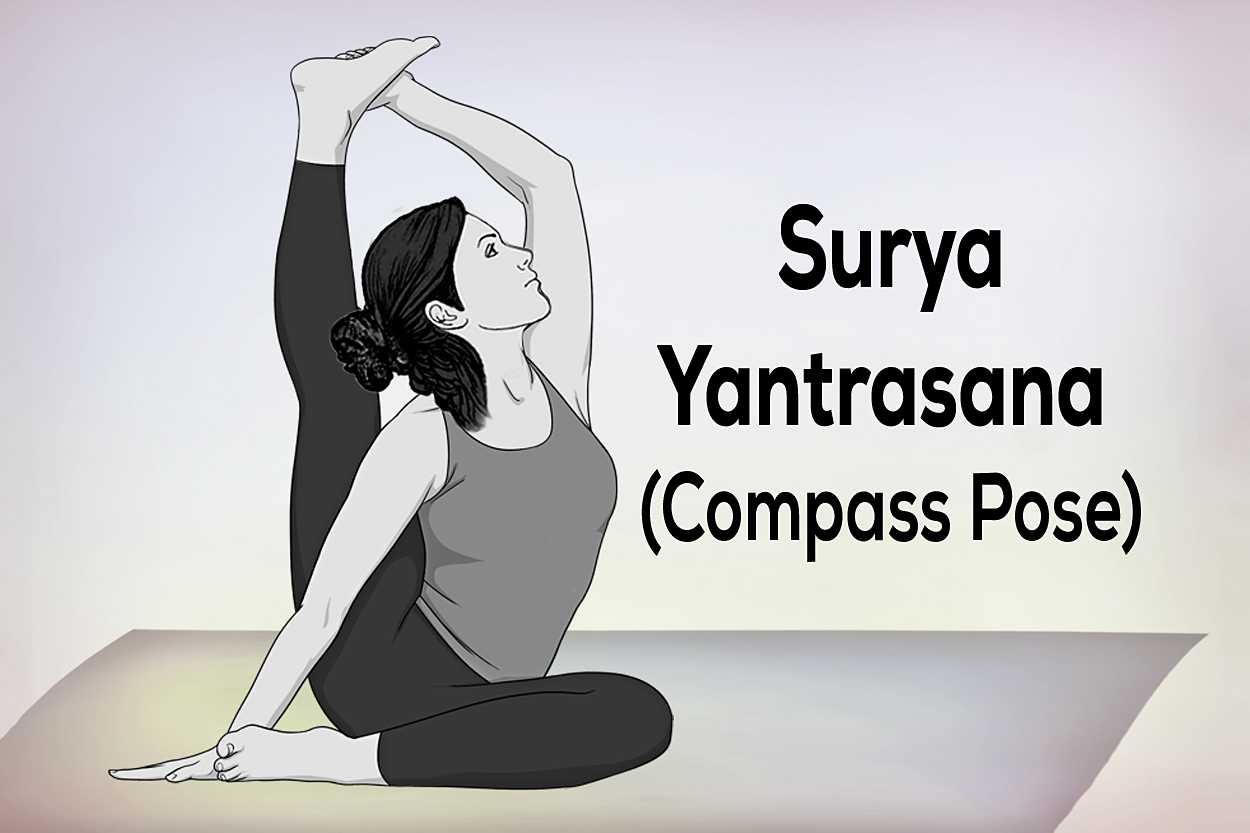
Compass Pose looks like a still moment, One leg lifting straight up like a sundial while your torso twists deeply. The shape is beautiful, but it also shows that yoga isn’t just about flexibility. It’s about paying attention, moving with patience, and noticing how your body reacts as you ease deeper into the pose.
Compass Pose, known in Sanskrit as Surya Yantrasana, reflects that idea well. “Surya” means sun and “Yantra” means instrument, which explains why the pose resembles a sundial. But beyond the poetic meaning, this posture has a practical role in yoga: it builds mobility across the hips, hamstrings, and side body while sharpening focus and breath coordination.
Below is a clear based guide to the pose, how it works, what muscles it targets, who should avoid it, and how to approach it safely.
In This Article:
1. What Is Compass Pose?
2. Benefits of Compass Pose (Surya Yantrasana)
3. How to Practice Compass Pose Safely
4. How Compass Pose Works in the Body
5. Who Should Avoid Compass Pose
6. Common Mistakes to Watch For Compass Pose
7. FAQs
What Is Compass Pose?
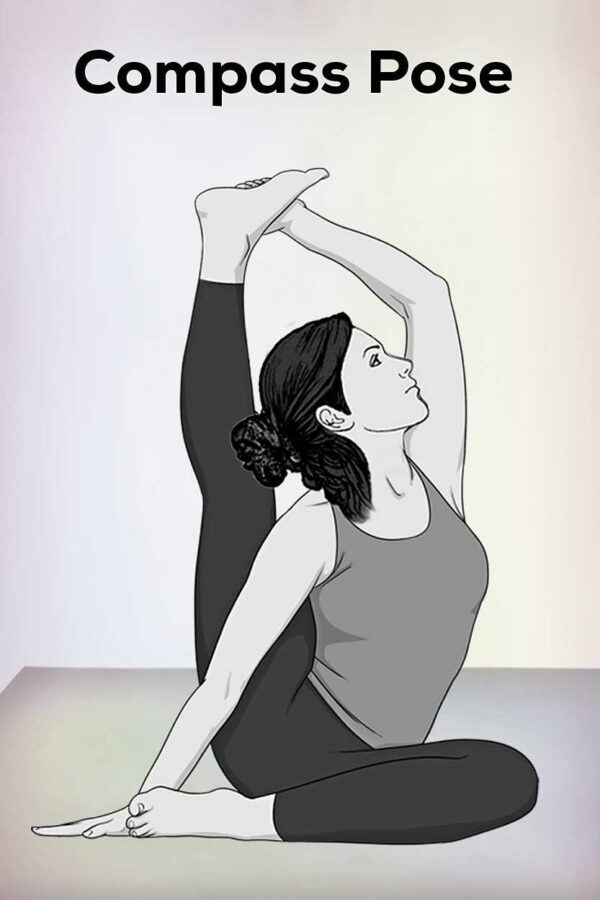
Compass Pose is an advanced seated twist that involves one leg behind the shoulder and the other leg folded on the mat. The lifted leg extends diagonally upward while the torso rotates and lengthens. This combination of twisting, hip opening, and hamstring lengthening makes it more challenging than it looks.
It is considered an evolution of Cradle Pose (Hindolasana) and builds on several mobility skills:
- External hip rotation
- Deep hamstring flexibility
- Shoulder mobility
- Spinal rotation
- Strength through the core and pelvic floor
Because these elements are layered into one shape, Compass Pose naturally demands time and consistent practice before it becomes accessible.
Benefits of Compass Pose (Surya Yantrasana)
Compass Pose offers a mix of mobility, stability, and breath awareness. Here are the benefits supported by established yoga anatomy sources and traditional teachings:
1. Improves Flexibility Across Hips and Hamstrings
This pose gives a strong stretch through your hamstrings and outer hips. Athletes who depend on hamstring strength, like runners or soccer players, often notice a steady increase in mobility when they practice it regularly.
2. Strengthens the Side Body and Core
When you lift the chest and lengthen through the ribs, you activate the obliques and spinal extensors. This helps improve posture and body awareness.
3. Enhances Spinal Mobility
Twisting poses improve how well your upper spine can rotate, something many people lose from long hours of sitting. Better rotation keeps your spine aligned and makes everyday movements easier and more natural.
4. Opens the Chest and Expands the Breath
The stretch in the intercostal muscles (the small muscles between each rib) creates more space for your diaphragm to move, which helps you breathe more easily during active yoga sessions.
5. Builds Focus and Body Awareness
This pose has many moving parts, so it naturally pulls you into the moment. You stay aware of your breath, balance, and alignment, and that awareness makes it easier to handle more advanced poses later.
6. Stimulates the Abdomen
Any deep twist gently compresses and then releases the abdominal organs. According to traditional yoga texts, this may encourage healthier digestion when practiced consistently and safely.
7. Develops Balance and Patience
Holding the lifted leg steady tests both mental and physical balance. Many practitioners find that this pose, practiced over time, builds confidence and calm concentration.
How to Practice Compass Pose Safely

A pose like this requires an intentional warm-up. Most yoga teachers recommend preparing with:
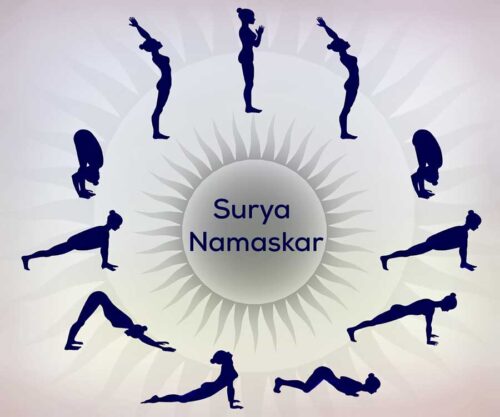
- Sun Salutations
- Hip openers such as Cradle Pose
- Hamstring stretches like Head-to-Knee Pose
- Shoulder openers
- Gentle twists for the spine
Once your body is warm, you can enter the pose with more ease and less risk of strain.
Step-by-Step Breakdown (Simplified)
- Sit in a comfortable seat with your spine tall.
- Bend your right knee and bring your right foot close to your left hip.
- Lift your left leg and guide it behind your left shoulder, like you’re placing a backpack strap.
- Reach your left arm under the lifted leg and plant your hand beside you.
- Extend your right arm overhead and grab the outer edge of your left foot.
- Slowly straighten the lifted leg as you rotate your chest upward.
- Keep your breath steady and your gaze soft.
This is not a beginner posture, so stop if you feel sharp pain or pulling in the hamstrings, knees, or lower back.

How Compass Pose Works in the Body
1. Hip Mechanics
Your hips do most of the work in this pose. The lifted leg needs strong external rotation, and the bent leg on the floor keeps your body stable. Yoga anatomy experts like Ray Long explain that this movement activates the gluteus maximus, gluteus medius, and the deep lateral rotator muscles.
2. Hamstrings and Adductors
The upward leg creates a long line from the sitting bone through the heel. This lengthens the hamstrings, especially the semimembranosus and semitendinosus muscles. The adductors also stretch as the leg moves outward.
3. Spinal Rotation
The twist in Compass Pose happens through the thoracic spine, the region most responsible for healthy twisting. Iyengar-style teaching emphasizes length before rotation, which reduces strain in the lumbar spine.
4. Shoulders and Side Body
Lifting your leg and sliding your arm underneath it stretches your lats, intercostal muscles, and outer ribs. This move improves side-body flexibility and opens your rib cage so you can breathe more easily.
5. Core Integration
Your core muscles, especially the obliques and transverse abdominis, keep your torso steady so the twist stays controlled and supported.
Who Should Avoid Compass Pose.
Because the pose puts significant pressure on the shoulders, hips, hamstrings, and spine, several groups should avoid it.
Avoid if you have:
- Recent surgery or injury in the hips, knees, spine, or shoulders
- Slipped disc, sciatica, or chronic low-back conditions
- Shoulder instability or dislocation history
- Very tight hamstrings (risk of muscle strain)
Pregnancy and Postnatal Considerations:Â The deep twist and abdominal compression make it unsafe during pregnancy and not advisable soon after childbirth.
Beginners: Because the pose demands advanced mobility and balance, beginners should work up to it through more foundational postures.
Common Mistakes to Watch For Compass Pose
1. Collapsing Through the Lower Back
When the spine rounds, the twist collapses and pressure shifts into the lumbar region. Instead, keep the spine long before you rotate.
2. Forcing the Leg Behind the Shoulder
This often leads to shoulder pinching or hamstring strain. Work progressively instead.
3. Holding the Breath
Stable breathing helps ease the twist and keeps your focus steady.
4. Lifting the Sitting Bones
Keep both sit bones rooted to maintain balance and alignment.
FAQs About Compass Pose (Surya Yantrasana)
Q1. What is Compass Pose?
Compass Pose is a deep seated stretch that opens your hips, hamstrings, and side body. It also includes a gentle twist that builds stability and balance.
Q2. Is Compass Pose good for beginners?
It is an advanced pose, but beginners can work toward it with prep stretches like hamstring openers, side-body stretches, and gentle twists.
Q3. Which muscles does Compass Pose target?
It mainly stretches the hamstrings, hips, shoulders, and side body. Your core muscles help stabilize you while you rotate and extend the leg.
Q4. What are the benefits of Compass Pose?
It improves flexibility, boosts spinal mobility, strengthens the core, and builds better posture and body awareness.
Q5. Do I need warm-up before trying Compass Pose?
Yes. Warm up with light hip openers, forward folds, and shoulder stretches to protect your joints and reduce tension.
Q6. Why is it called Surya Yantrasana?
“Surya” means sun and “Yantra” means instrument or tool. The final shape of the pose looks like a sun dial, which inspires the name.
Q7. Can Compass Pose help with back pain?
It may ease tightness in the lower back by stretching the hamstrings and side body, but it shouldn’t be done if you have active back injuries.
Q8. How long should I hold Compass Pose?
Start with 15–20 seconds and increase as your flexibility improves. Focus on steady breathing and avoid forcing the stretch.
Q9. What if my leg does not lift high?
Use a strap around your foot or keep your knee slightly bent. Flexibility will build over time as your muscles open.
Q10. Who should avoid Compass Pose?
Anyone with recent hamstring, hip, shoulder, or lower-back injuries should skip it or practice with guidance from a yoga teacher.
Legal Disclaimer: Before participating in any exercise program or using any fitness products or services that may be described and/or made accessible in or through the Nexoye Website and/or the Services, you should consult with a physician or other healthcare provider.